Baby Showers and Milestone Birthdays: How to Include the Guests Who Don't Scan QR Codes
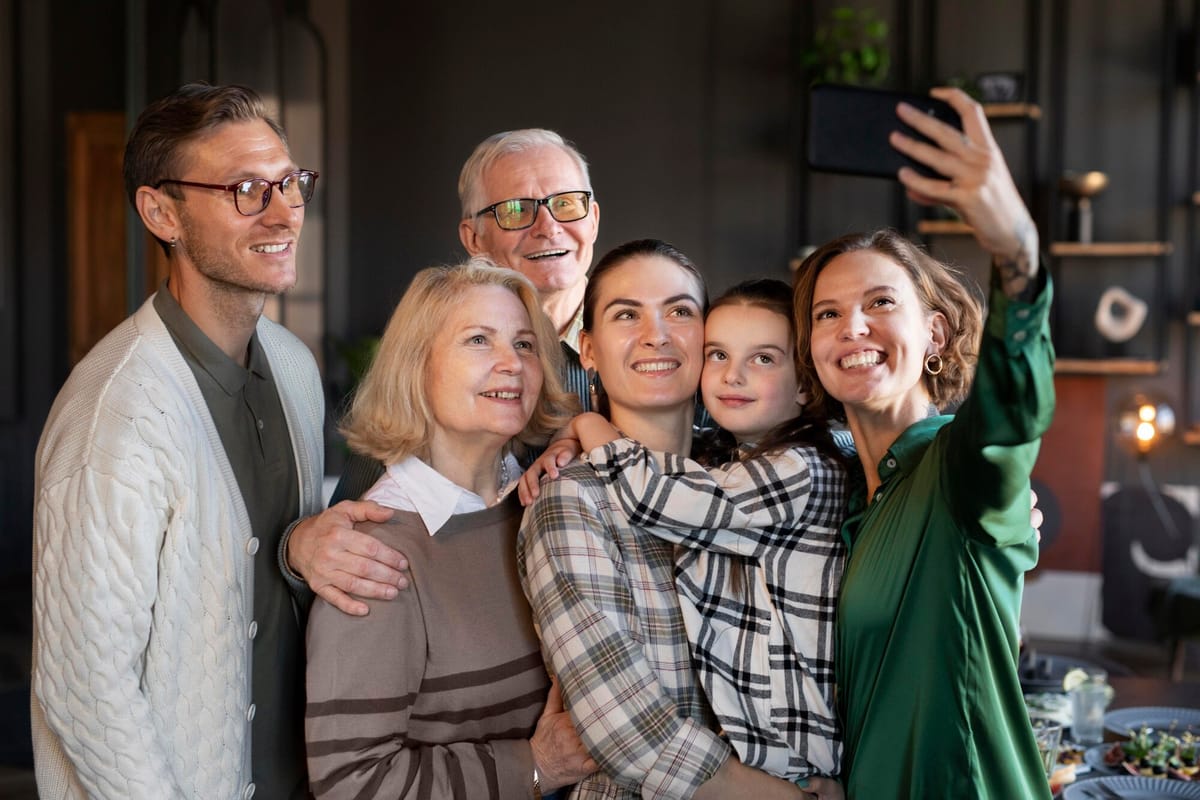
The best story in the room usually belongs to the person least likely to end up in the photos.
At a baby shower, it is the grandmother who had her first child in a country she no longer lives in. At an eightieth birthday, it is the man's oldest friend, who has known him since 1961 and is the only remaining witness to about six things worth hearing. These people show up, sit down, talk to two or three others, and leave. Afterwards there are four hundred photographs of the cake table and none of the conversation that actually mattered.
This is a solvable problem, and solving it starts with being honest about a gap in the data that most event advice ignores.
The gap nobody plans around
Baby showers and milestone birthdays have the widest age spread of any celebration category. A wedding reception skews toward the couple's own generation. A thirtieth birthday is mostly thirty-year-olds. But a baby shower pulls in the mother-to-be's friends, her mother's friends, and frequently her grandmother. A seventieth or eightieth birthday inverts the pyramid entirely, with a guest list where most of the room qualifies for a senior fare.
Most showers run between fifteen and thirty guests, with published estimates ranging from ten to forty depending on the source, and typical attendance at around 70 to 80 percent of those invited. That is a small enough room that every single person matters. Losing five older guests from your photo record is not a rounding error. It is a fifth of the event.
Here is the specific problem, and the numbers are more interesting than the assumption.
Older guests are not offline. Pew Research Center, surveying 5,022 US adults between February and June 2025, found that 78 percent of adults aged 65 and over own a smartphone, against 90 percent of those aged 50 to 64 and 97 percent of adults under 50. Ninety percent of over-65s use the internet. Ninety-eight percent of all US adults own a mobile phone of some kind. The device is in the handbag.
What is missing is not hardware. It is habit. Survey data puts QR code scanning among consumers aged 65 and over at roughly 31 percent in the previous three months, against 44 percent for the 45 to 64 bracket and well over 80 percent for the youngest adults. Different studies measure this differently, and figures ranging from 31 to 38 percent appear depending on whether the question asks about recent scanning or scanning ever, so treat the precise number with caution. The direction is not in doubt.
Put those two findings together and you get the useful insight. Roughly four in five older guests are carrying a device that can scan a QR code. Fewer than half have done it recently. That is a gap of something like forty percentage points, and it is not a technology gap at all. It is a gap of unfamiliarity, and unfamiliarity is fixed by a person, in thirty seconds, not by a better app.
Worth noting one contradiction in the published data, because it affects how you read any of this. AARP's 2025 Tech Trends report puts smartphone ownership among older adults at 91 percent, considerably higher than Pew's 78 percent. The difference is definitional. AARP's cohort starts at 50, Pew's at 65. When you read a statistic about older adults and technology, check where the age bracket begins before you plan around it.
What actually works with older guests
The advice below comes from the mechanics of the problem rather than from any survey, and it is mostly about people rather than software.
Assign someone. This is the single highest-return thing you can do, and it costs nothing. Pick a teenager or a younger cousin and give them one job for the first thirty minutes: go to every guest over sixty, offer to help, and scan it for them if they would rather. Not a general offer to the room. Specific people, approached individually. A guest who is handed a working phone with the camera already open will use it. A guest who is told there is a QR code on the table will smile politely and not do it.
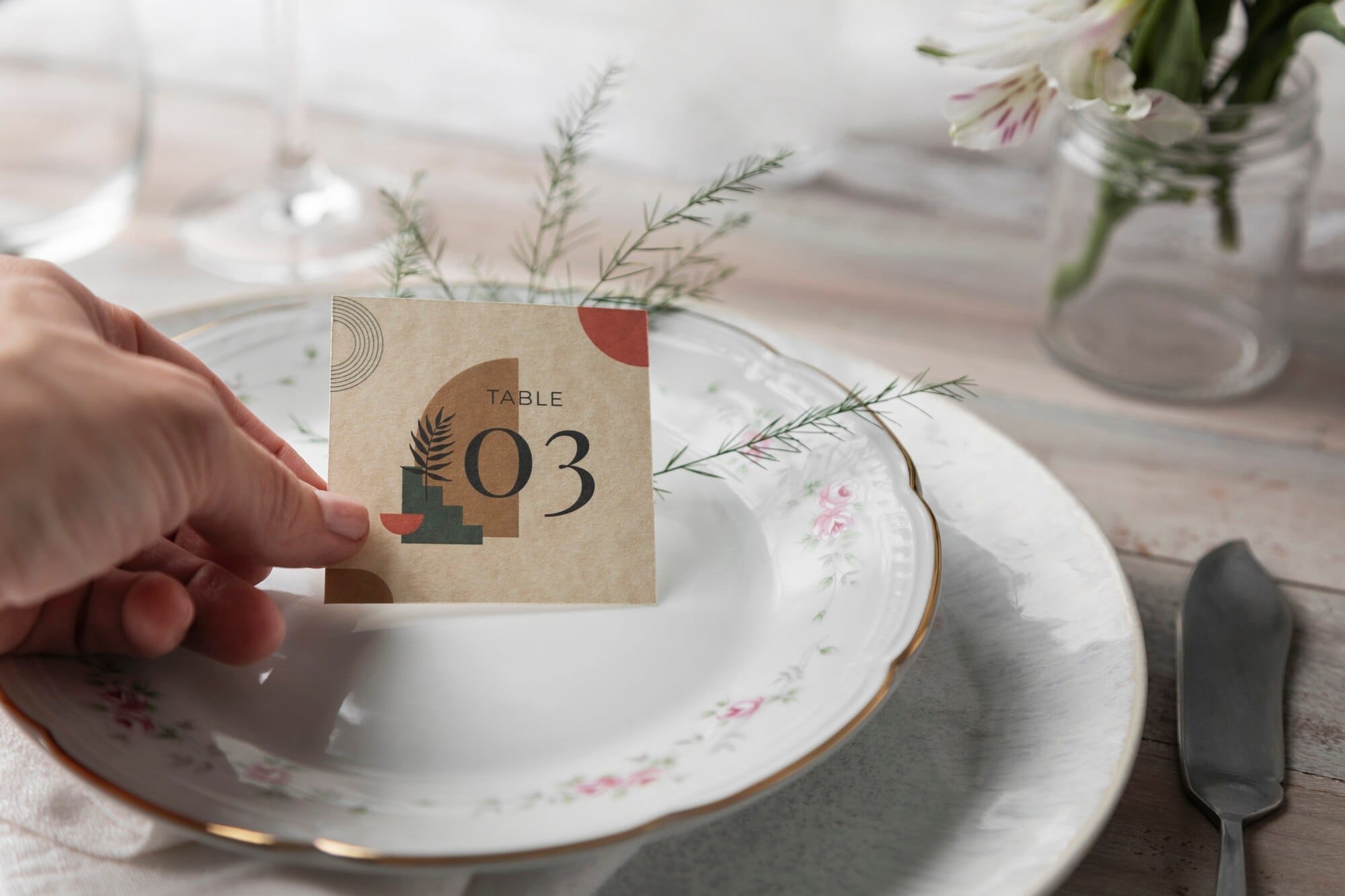
Put the code where the reading glasses already are. Table cards work. A poster by the entrance does not, because people walk past it while holding a coat and a gift. If your guest list skews older, print the QR larger than looks necessary and put a plain one-line instruction underneath in a legible size. Point your camera at this to add your photos.
Do not make the instruction the joke. A lot of party signage is written in a knowing, playful voice that assumes the reader already understands the mechanism. Cute copy is a barrier for anyone who is not confident. Write it plainly and put the clever line somewhere else.
Have an offline path. Some people will not do it, and that is completely fine. Someone should be prepared to take a guest's phone at the end and airdrop or upload their photos for them, or simply take the photograph on their behalf. The point is the photograph existing, not the guest operating the system.
Do not require a download. This matters more here than at any other event type. Every additional step costs participation, and asking a seventy-eight-year-old to install an app at a party is asking them to decline. Whatever tool you use, it needs to run in the browser from a scan. This is a hard requirement, not a preference.
The thing worth capturing is not a photograph
Here is where these two event types differ from every other celebration, and where most hosts get the priority backwards.
At a wedding, the photographs are the record. At a baby shower or a ninetieth birthday, the photographs are secondary. What you will want in twenty years is the sound of people talking.
Grief practitioners and researchers describe this consistently. Under the continuing bonds model, which has been an established framework in bereavement research since the mid-1990s, maintaining a connection to someone who has died is treated as a normal and healthy part of grief rather than something to move past. And the specific thing bereaved people report losing first, and missing most, is the voice. They retain a clear visual memory of a person for years. The exact sound of them starts to blur within months. Photographs do not prevent this. Recordings do.
Some caution is warranted about how loudly this is currently being argued, because a small industry of voice-preservation services has grown up around the claim and has an obvious interest in it. But the underlying observation is not controversial, and it is easy to verify against your own experience. Most families have hundreds of photographs of a grandparent who has died and not one recording of them speaking.
A baby shower and a milestone birthday are two of the very few occasions where the right people are in a room, in a good mood, with something to say, and where asking them to say it out loud is not strange.
What to actually ask for
The mistake is to leave it open. Asked to record a message, most people freeze and produce thirty seconds of congratulations that sounds like a greetings card.
Give them a question instead. For a baby shower:
- What was the first week like with your first baby, honestly?
- What is one thing you wish somebody had told you?
- What was your mother like when you were small?
For a milestone birthday, ask the guests about the person, not to the person:
- How did you two meet, and what was he like then?
- Tell me about a time she made you laugh.
- What is something about him that his grandchildren would not know?
These produce ninety seconds of something worth keeping. The last one, in particular, tends to produce material nobody in the family has heard.
JoinMyMoment supports voice messages on every plan at no cost, alongside photos and video, which is the reason it suits these two event types better than a pure photo tool. Guests scan the code and can leave a recording as easily as they can upload a picture, without installing anything. If you want the version that works with the least effort, put the question itself on the table card, next to the code, so the guest reads the prompt at the same moment they open the recorder.
Setting it up
The whole thing takes about fifteen minutes the week before.
Create the album, write your prompt question, print table cards with a large code and a plain instruction, and brief one younger guest on the helping job. On the day, mention it once at the start when everyone is seated and paying attention, rather than announcing it to a room already in motion. Say what it is for. People participate more when they understand that somebody will listen to this later.
Afterwards, download everything. This is the step people forget, and the one that determines whether any of it still exists in five years. A JoinMyMoment Moment stays open for up to fifteen days, which gives the guests who meant to upload and did not a second chance, and then you take the whole gallery down in full quality and put it somewhere permanent.
For a baby shower specifically, there is an obvious use for it later. A child turning eighteen, or becoming a parent themselves, and hearing a great-grandmother who died before they were born describe what the first week was like. That recording costs nothing to make and cannot be made retroactively.
Frequently asked questions
Will older guests be able to use a QR code photo app? Most can, and more will than you expect. Roughly 78 percent of adults aged 65 and over own a smartphone, though only around a third have scanned a QR code recently. The gap is familiarity, not capability. Assigning one younger guest to help for the first half hour closes most of it.
Do guests need to download an app? They should not have to, and if a tool requires it you should choose a different tool. Browser-based sharing, where scanning the code opens the album directly, is the only version that works reliably with a mixed-age guest list.
How many guests attend a typical baby shower? Most fall between fifteen and thirty, with some sources putting the range as wide as ten to forty. Expect roughly 70 to 80 percent of invited guests to attend.
What should I ask guests to record? Something specific. Open-ended requests produce generic messages. A written question on the table card, such as what one thing do you wish somebody had told you, produces something worth keeping.
Is it worth doing this for a small party? Arguably it matters more at a small party. At a thirty-person shower every guest is a meaningful proportion of the record, and the guests most likely to be missed are usually the oldest ones in the room.
How do I collect photos and voice messages in one place? Set up a shared album that supports both, put the code on the tables, and give guests a prompt. Create a free Moment on JoinMyMoment and test the flow on your own phone before the day.
Sources: Pew Research Center, survey of 5,022 US adults conducted 5 February to 18 June 2025, on smartphone ownership and internet use by age; Pew Research Center mobile fact sheet; AARP 2025 Tech Trends report; QR TIGER and Insider Intelligence QR adoption data by age bracket; Fortune Business Insights QR demographic data; WebBabyShower, CostHelper and ParentCalc baby shower cost and guest count estimates; continuing bonds framework as established in bereavement research. Where a source sells a product related to the claim it publishes, we have said so in the text. Statistics on QR adoption by age vary by methodology and should be read as directional.